

Medical content by Elias Tsiolis, Director Surgeon · Last updated: 11 May 2026
Gallstones
Stones form when the chemical composition of bile changes, causing crystallization and build-up of solid material.
The condition is very common in adults and more common in women, especially after the age of 40.
In most cases gallstones cause no symptoms, but when they cause pain under the ribs, classic biliary colic or even complications such as inflammation or pancreatitis, surgical removal of the gallbladder (cholecystectomy) is the definitive treatment.
Everything You Need to Know About Gallstones
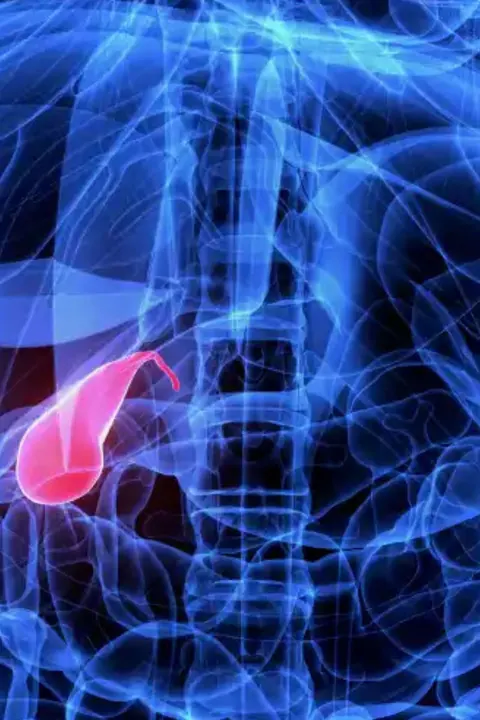
The gallbladder is a small sac under the liver that stores bile — a fluid that helps break down fatty foods. When we eat, the gallbladder contracts and releases bile into the intestine. If the duct or the gallbladder is blocked by a stone, it causes pain or even inflammation.
Causes and Risk Factors
Gallstones are made of cholesterol, bilirubin and calcium salts. The main contributing factors are:
- Heredity
- Obesity
- A diet rich in fat
- Low physical activity
- Rapid weight loss (diets or bariatric surgery)
- Hormonal changes (pregnancy, contraceptives)
- Age over 40
Symptoms
In most cases gallstones cause no discomfort. But when they block the flow of bile, the following appear:
- Pain in the right upper abdomen (under the ribs or below the breastbone)
- Nausea or vomiting after a fatty meal
- Bloating or indigestion
- Fever or chills (with inflammation – cholecystitis)
- Jaundice (yellowing of the skin/eyes, when a stone blocks the common bile duct)
The pain is typically intense and stabbing, colicky, or may last for hours and radiate to the right shoulder blade or shoulder.
Complications
If gallstones are left untreated, they can cause:
- Acute cholecystitis (inflammation of the gallbladder)
- Blockage of the common bile duct
- Pancreatitis (when a stone blocks the papilla of Vater and thus the junction with the pancreatic duct)
- Cholangitis (infection of the bile ducts)
Diagnosis
Diagnosis is based on:
- Upper abdominal ultrasound (a simple, painless and reliable examination)
- Blood tests (liver enzymes, bilirubin)
- In case of complications: CT scan and/or magnetic resonance cholangiography (MRCP)
Treatment
The definitive treatment of gallstones is surgical removal of the gallbladder, because stones keep forming and symptoms usually return if the gallbladder is not removed.
Surgical Treatment
Laparoscopic cholecystectomy
- The most modern and safe method, used in almost all cases:
- 1 small incision of 3 cm at the navel and 3 small incisions of 0.5–1.8 cm
- Painless and bloodless procedure
- 1-day hospital stay
- Return to work in 1–5 days
- Excellent cosmetic result
- Removing the gallbladder does not affect digestion, because bile continues to be produced and flows into the intestine, it is just no longer stored.
Aftercare
- Light diet for 2–3 days
- Gradual return to a normal diet without restrictions
- Avoid fatty meals for 1 week
- Return to full activity in 3–7 days
Most patients no longer have pain, indigestion or bloating, do not need to adjust their diet, and their quality of life improves immediately.
Frequently Asked Questions
Are gallstones dangerous?
Not always, but they can cause acute inflammation or pancreatitis, which requires hospital admission and can have a difficult and complicated course if it occurs.
If I have no symptoms, do I need surgery?
Not necessarily, if the stones cause no symptoms at all, especially in older people.
Can gallstones be dissolved with medication?
Not effectively. Drug treatments have very limited success.
Is laparoscopic cholecystectomy safe?
Yes, it is one of the safest and most common operations in general surgery.
Will I have digestive problems after removal?
No. The body adapts fully and digestion works normally.
How long does the operation take?
About 30–60 minutes, depending on the case and the surgeon's experience.
When can I drive or return to work?
In 1–5 days, unless your job involves heavy manual work.
What complications can occur?
Bleeding or injury to the bile ducts is extremely rare; less often, minor bleeding or infection at the incision sites (<1%).
Will there be a scar?
The incisions are very small and almost invisible after a few weeks.
Can gallstones come back?
Not in the gallbladder (since it is removed), but very rarely in the bile ducts.