

Medical content by Elias Tsiolis, Director Surgeon · Last updated: 11 May 2026
In most cases they are benign, but in some cases they can be pre-cancerous lesions and need monitoring or, more appropriately, surgical removal.
They are found in about 4–7% of the general population and are usually discovered by chance during an abdominal ultrasound.
Everything You Need to Know About Gallbladder Polyps
Polyps are projections from the inner wall of the gallbladder. There are several types:
- Cholesterol polyps (the most common – benign)
- Inflammatory polyps (due to chronic inflammation)
- Adenomatous polyps (true tumors – may become malignant)
Finding them is important because some types may hide or develop into cancer, especially when they are larger than 1 centimeter.
Causes and Risk Factors
- High cholesterol levels in the bile
- Chronic inflammation of the gallbladder
- Gallstones (cholelithiasis)
- Age over 50
- Heredity
- Metabolic syndrome or obesity
Symptoms
Most polyps cause no symptoms. However, in some cases the following may occur:
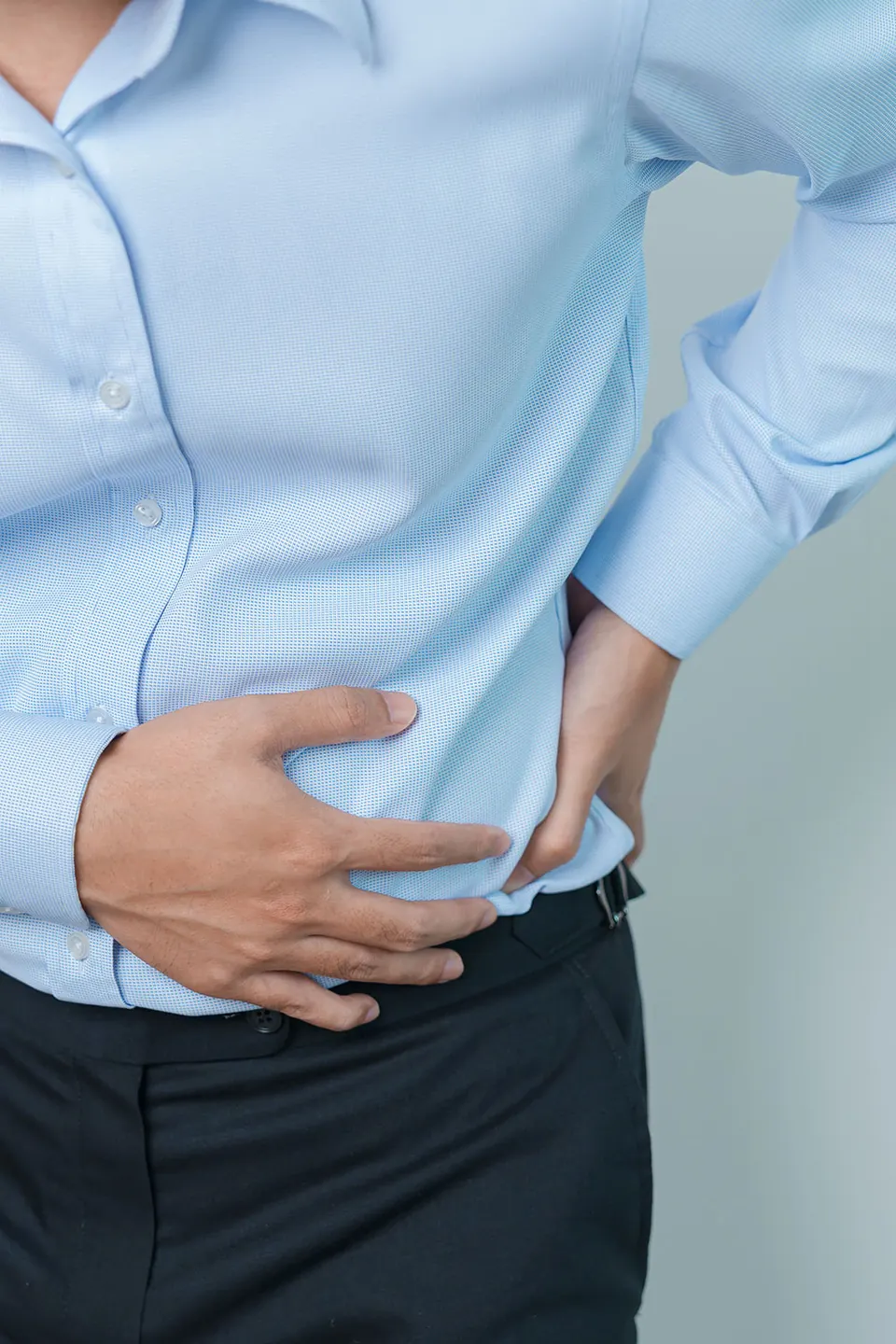
- Discomfort or heaviness in the right upper abdomen
- Nausea or bloating after heavy or fatty meals
- Pain in the upper right part of the abdomen
Diagnosis
Diagnosis is mainly made with an upper abdominal ultrasound, which can show:
- The size of the polyp
- Its position in the gallbladder
- Whether there are also stones or inflammation
In some cases an MRI (MRCP) is needed for a more accurate assessment, especially if the polyp is large or suspicious.
Treatment
Most polyps do not need an immediate operation, only monitoring. However, there are specific criteria that indicate the need for surgical removal:
Surgical Treatment
Indications for cholecystectomy:
- Polyps > 10 mm (1 centimeter)
- Growth on successive ultrasounds
- Coexisting gallstones or inflammation
- Symptomatic polyps (pain, nausea)
- Age > 50
- Family history of gallbladder cancer
- In these cases, laparoscopic cholecystectomy is the treatment of choice.
Laparoscopic Cholecystectomy
Removing the gallbladder is the safest and most definitive solution when there is a risk of malignancy or symptoms. The operation is performed laparoscopically, with:
- 1 small incision of 3 cm at the navel and 3 small incisions of 0.5–1.8 cm
- Painless and bloodless procedure
- 1-day hospital stay
- Return to work in 1–5 days
- Excellent cosmetic result
- After the operation no medication is needed and digestion works normally.
Monitoring
For small, symptom-free polyps (<10 mm) without gallstones, the following is recommended:
- Ultrasound check every 6–12 months
- Assessment of size and shape
- Prompt reassessment and possibly surgery if symptoms appear
Frequently Asked Questions
Are gallbladder polyps dangerous?
Most are benign, but they need monitoring because a small proportion may progress.
Can they turn into cancer?
Yes, adenomatous polyps larger than 1 cm carry an increased risk of malignancy.
If my gallbladder is removed, will I have problems?
No. Digestion remains normal and the body adapts fully.
Is the procedure painful?
Laparoscopic cholecystectomy is painless and bloodless, with minimal recovery time.
How often should I have an ultrasound?
If the polyp is <1 cm, a check every 6–12 months is recommended.
What causes polyps to form?
A combination of diet, metabolic factors and inflammation of the gallbladder.
Is there a drug treatment?
No. There are no medicines that make polyps disappear.
When should I be concerned?
If you get pain in the right upper abdomen, nausea or the polyp grows.
What diet helps prevent them?
A balanced, low-fat diet helps prevent inflammation of the gallbladder.
Can gallstones and polyps occur together?
Yes, quite often — in that case laparoscopic removal is recommended.